Color Doesn't Care How You Feel: The Real Science Behind Why Bold Dressing Works Even on Your Worst Days
Let's be real for a second. The phrase "dopamine dressing" sounds incredible. It's catchy, it's empowering, and it gave a generation of women permission to wear neon yellow to brunch without apologizing. But somewhere between the Pinterest boards and the wellness influencer roundups, the actual science got a little... watered down.
The popular version of dopamine dressing goes something like this: wear happy colors, feel happy. Simple, clean, shareable. Except human psychology has never been that cooperative, and if you've ever thrown on a bold outfit hoping for an instant mood lift only to still feel like a soggy Tuesday — you already know the gap between the trend and the truth.
Here's the thing, though. The real story is so much better.
What Dopamine Dressing Actually Gets Right
The term was popularized by fashion psychologist Dr. Dawnn Karen, who framed it around intentional dressing as a form of emotional regulation. The core idea — that clothing choices influence psychological states — is genuinely backed by research. A 2012 study published in the Journal of Experimental Social Psychology introduced the concept of "enclothed cognition," which found that what we wear doesn't just signal identity to others; it actively changes the way we think and behave.
In plain terms: your outfit is talking to your brain, not just the room.
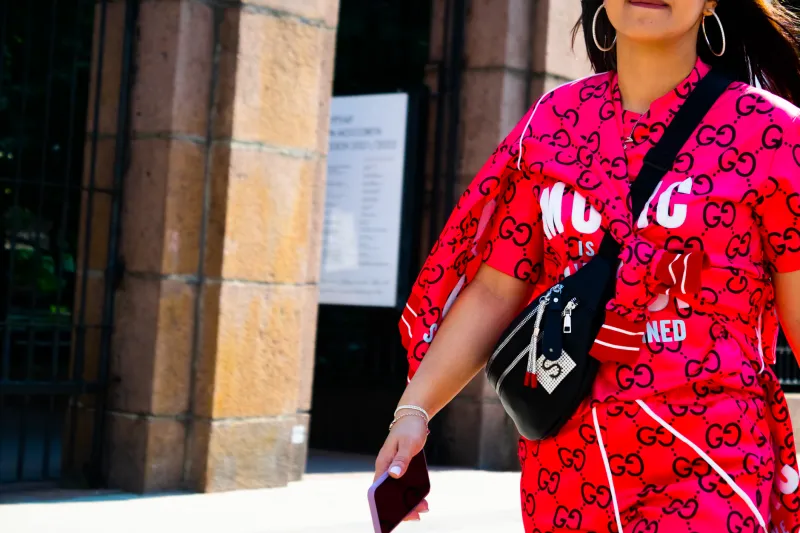
Bold color specifically carries a lot of neurological weight. Warm, saturated hues like red and orange have been shown to increase arousal and alertness. Cooler, vivid tones like cobalt and emerald are linked to feelings of confidence and calm competence. These aren't vibes. These are measurable physiological responses — heart rate shifts, cortisol fluctuations, changes in reaction time.
So yes, color does something real. The oversimplification isn't that the science is wrong. It's that the mechanism is more interesting than "wear bright stuff, get happy chemicals."
The Myth Part: Why Matching Your Outfit to Your Mood Is Backwards
Here's where the viral version loses the plot. Most dopamine dressing content implies you should dress according to how you already feel — reach for yellow when you're sunny, wear bold prints when you're feeling yourself. Which sounds intuitive, but it actually inverts the most powerful use of color psychology.
Waiting until you feel bold to dress boldly is like waiting until you're already confident to do the scary thing. It doesn't work that way. Mood follows action far more reliably than action follows mood — a principle that behavioral psychologists have been documenting for decades.
When you pull on a cobalt wrap dress on a morning where you'd genuinely rather disappear, something shifts. Not because the color magically erases whatever you're carrying, but because the act of choosing boldness — even reluctantly — sends a signal to your nervous system. You are not hiding today. That message is louder than you think.
Researchers call this "behavioral activation," and it's a cornerstone of cognitive behavioral therapy. The behavior comes first. The emotional shift follows. Your wardrobe, it turns out, is a surprisingly accessible lever for that process.
The Confidence Loop Nobody Talks About
There's a feedback cycle that bold dressers tap into, often without realizing it. It goes something like this:
- You wear something vivid and intentional.
- People respond differently to you — more eye contact, more engagement, more "I love that on you."
- You carry yourself differently because of those responses.
- That shift in posture and presence reinforces the internal state you were trying to create.
This isn't vanity. It's social neuroscience. We are wired to respond to our environment, and our social environment responds to what we put out. Bold color is a high-visibility signal. It invites interaction. And for many people — especially those who have spent years dressing to shrink — that invitation is genuinely transformative.
A 2020 study from the University of Hertfordshire found that people who dressed in ways that felt expressive and authentic reported significantly higher wellbeing scores than those who dressed for perceived social acceptability. The key word there is authentic — which means the bold colors have to feel like you, not like a costume you're performing.
So How Do You Actually Use This?
The practical takeaway isn't "wear more color and feel better." It's more nuanced than that, and honestly more useful.
Dress against the grain intentionally. On days when anxiety is running the show or your energy is low, that's precisely when a deliberate color choice pays the biggest dividends. Think of it as dressing for the version of yourself you're trying to call forward, not the one currently lying on the bathroom floor.
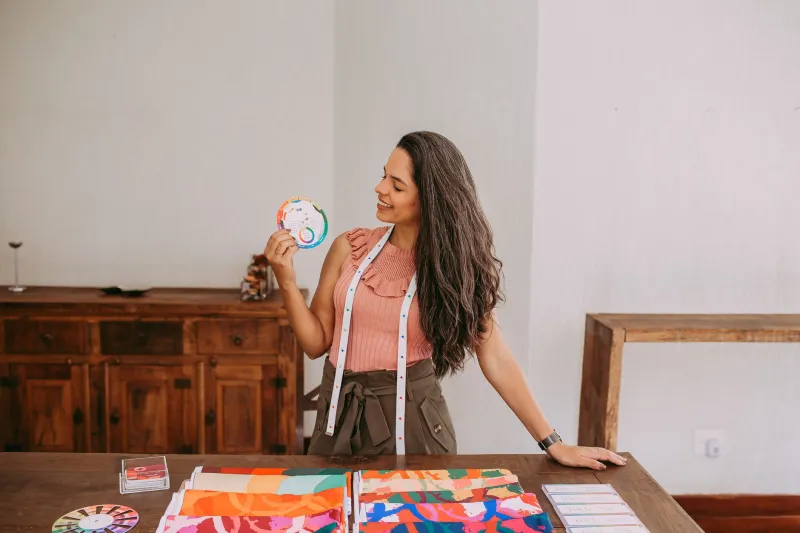
Pick your anchor color. Research suggests that individual associations with specific colors vary significantly based on personal history and cultural context. The color that makes you feel capable and present might not be the one trending on TikTok this week. Pay attention to which hues consistently shift something in you — that's your data, not anyone else's.
Pair bold color with intentional fit. Color psychology doesn't operate in isolation. A vivid shade in a silhouette that feels uncomfortable or off-brand for you won't deliver the same effect as that same color in something you feel genuinely good wearing. The whole outfit is the message.
Give it time. If you've spent years in neutrals, your nervous system isn't going to immediately recalibrate the first time you wear a poppy red coat. Bold dressing is a practice, not a switch. The research on enclothed cognition shows cumulative effects — the more consistently you dress with intention, the more automatic the psychological benefits become.
Color as Emotional Infrastructure, Not Just Aesthetic
The reason Fuzi Fabulous exists — and the reason bold personal style matters beyond aesthetics — is that how you present yourself to the world is one of the few daily rituals you have near-total control over. And in a world that constantly asks you to shrink, blend in, or perform a version of yourself that's easier for others to digest, dressing boldly is a quiet but consistent act of self-determination.
Dopamine dressing as a trend isn't wrong. It's just incomplete. The real power of color isn't that it mirrors your mood back at you like a very expensive selfie filter. It's that it can actually move you — emotionally, neurologically, socially — in the direction you need to go.
Even when you're not feeling it. Especially when you're not feeling it.
So tomorrow morning, when you're standing in front of your closet debating between the safe beige and the one that makes a statement — you now know what the science says. Your outfit is going to talk to your brain either way. You might as well give it something worth saying.