Drawn to That Color for a Reason: What Your Signature Hue Reveals About Who You Really Are
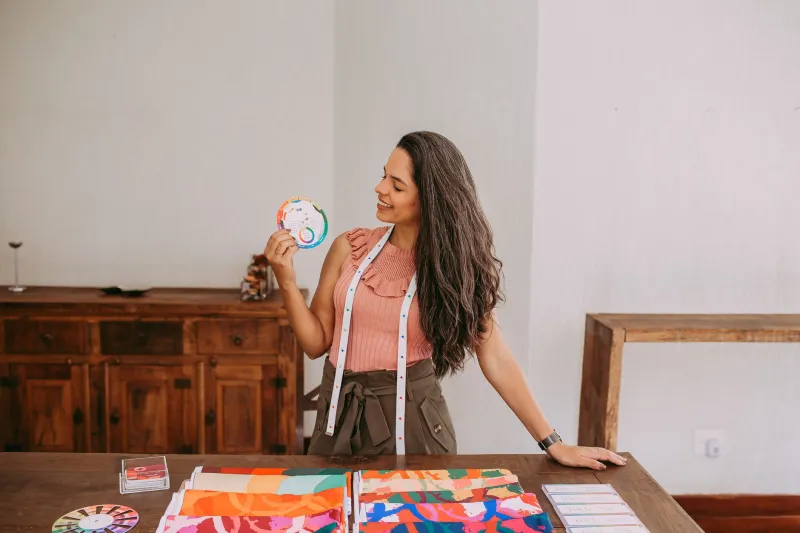
That Color You Always Reach For? It's Not Random
We've all been there. You're standing in front of a packed clothing rack, eyes scanning every shade on the spectrum, and then — boom. Your hand goes straight to it. That same color. Again. Maybe it's a deep, moody cobalt. Maybe it's a warm, earthy terracotta. Maybe it's the kind of electric yellow that makes people shield their eyes and ask if you're okay.
Here's the thing: you're not just picking a color. You're picking a feeling. A statement. A version of yourself you want to walk out the door as. Color psychology — the study of how hues affect human behavior, emotion, and perception — has been a legitimate research field for decades. And while it's not a crystal ball, it has a lot to say about why certain colors feel like home.
So let's break it down. Not in a rigid, "this color means THIS" kind of way, because real people are way more layered than that. But in a way that might make you nod and think, oh, that tracks.
Red: The Color of the Woman Who Walks In First
Red has always been loud. Historically, it's been tied to power, passion, and presence — and modern psychology backs that up. Studies from the University of Rochester found that people associate red with dominance and confidence. But here's what the research misses: the women who live in red aren't just trying to be seen. They already know they will be.
Take Marisol, a 34-year-old event planner from Miami. "Red is the only color that makes me feel like I'm not apologizing for taking up space," she told us. "I wore red to my first big client pitch and I got the contract. I don't think it was a coincidence."
Red loyalists tend to be action-oriented, emotionally honest, and not particularly interested in blending in. If this is your color, you probably feel things deeply and aren't afraid to let that show — on your body or in your life.
Blue: The Thinker, the Dreamer, the One Who Actually Listens
Blue is the most universally liked color in the US, which sounds boring until you realize it's not one thing at all. Navy reads completely differently than sky blue, which is nothing like electric cobalt. But across the spectrum, blue tends to attract people who lead with their heads and their hearts in equal measure.
Psychologically, blue is associated with calm, trust, and introspection. People drawn to it often value honesty, crave depth in their relationships, and tend to think before they speak — which, in a world that rewards loud and fast, is genuinely countercultural.
Jamila, a 28-year-old librarian from Portland, Oregon, has been wearing blue in some form since she was a kid. "It's not that I'm shy," she explained. "It's that I want people to actually hear me when I talk. Blue feels like credibility. Like I've done the thinking already."
If blue is your signature, you're probably someone who builds slowly and deeply — friendships, careers, wardrobes. You're not here for the flash. You're here for the substance.
Yellow and Orange: The Optimists Who Mean It
Bold yellows and vivid oranges are not for the faint of heart, and the people who claim them know that. These are warm tones — literally, they raise perceived temperature in a room — and they tend to attract people who are genuinely, stubbornly hopeful.
Research published in the journal Color Research & Application found that yellow is consistently associated with creativity, spontaneity, and high energy. Orange pulls in similar associations with enthusiasm and warmth. But what the data doesn't capture is the quiet resilience that often lives inside people who choose these shades.
Kendra, a 41-year-old middle school art teacher from Atlanta, wears yellow almost exclusively. "People think I'm just bubbly," she said. "But I started wearing yellow during the hardest year of my life. It was like I was daring myself to find something good every single day. Now it's just who I am."
Yellow and orange loyalists are often people who've chosen joy intentionally — not because life handed it to them, but because they decided it was worth fighting for. That's not naivety. That's courage with a good color story.
Green: Rooted, Growing, and Quietly Revolutionary
Green is having a serious cultural moment right now, and it's not just because of the wellness industry's obsession with matcha. People drawn to green — especially the richer, more complex shades like forest, olive, and sage — tend to be in active conversation with their own growth.
Color psychology links green to balance, renewal, and a deep need for authenticity. Green people are often the ones in the room asking the harder questions. They care about where things come from — their food, their clothes, their relationships.
Dani, a 25-year-old sustainability consultant from Chicago, started gravitating toward green when she shifted careers. "It felt like I was finally aligning my outside with my inside," she said. "I'd been wearing all black for years, which I loved, but green felt like I was finally saying something true."
If green is calling your name, you're probably in a season of becoming. And you're doing it with real intention.
Purple and Pink: Refusing the Either/Or
Purple has historically straddled the line between power and spirituality — it was the color of royalty precisely because it was rare and expensive. Today, people who gravitate toward purples and bold pinks are often those who refuse to be categorized. They're soft and strong. Playful and serious. Feminine and fierce.
Rosario, a 37-year-old attorney from New York City, wears hot pink to depositions. "People underestimate me," she said, with zero regret in her voice. "I let them. Then I win."
There's something quietly radical about owning a color that society has tried to shrink into a box. Pink and purple wearers often know exactly what they're doing — and they're doing it on purpose.
Your Color Might Be Telling You Something You Already Know
Here's the real takeaway: you don't need a color quiz or a personality test to understand your signature hue. You already know it. It's the one that makes you feel like yourself when you put it on — not like you're performing, but like you've stopped performing.
Color psychology is a tool, not a verdict. Your relationship with color shifts as you do. The woman who lived in black for a decade and now can't stop buying cobalt blue? She's not a different person. She's a deeper one.
So the next time you reach for that color — your color — pause for just a second. Not to second-guess it, but to honor it. Because somewhere in that instinct is a whole lot of truth about who you are and where you're headed.
And honestly? That's the most fabulous thing about getting dressed.