Color as a Superpower: How Dressing Boldly Rewires the Way You Show Up Every Single Day
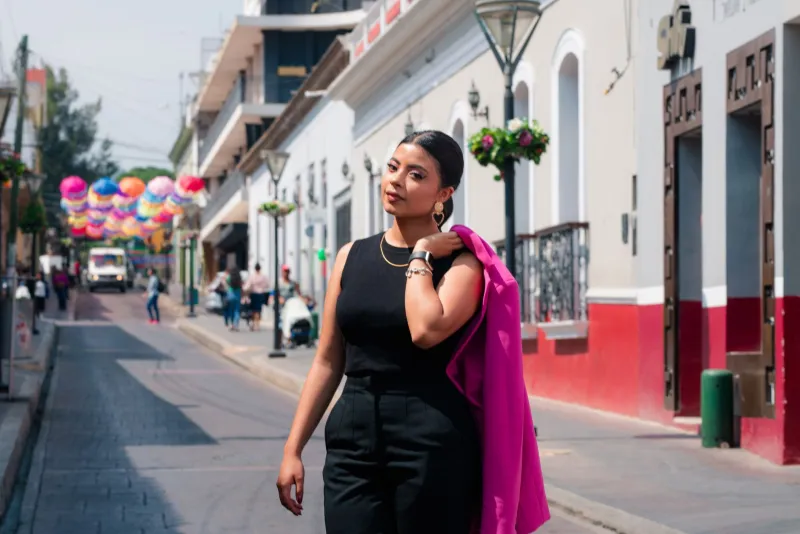
Let's be honest: most of us have a "safe" outfit. The one we reach for when we're tired, anxious, or just not sure how the day is going to go. Usually it's some variation of gray, black, or navy — reliable, forgettable, fine. But what if that safety net is actually holding you back? What if the most powerful thing you could do before a big meeting, a first date, or even just a Tuesday grocery run is reach for something vivid?
The science — and the stories — say yes. Loudly.
What's Actually Happening in Your Brain When You Go Bold
Psychologists have a name for the phenomenon where clothing affects your mental state and performance: enclothed cognition. Coined by researchers Hajo Adam and Adam D. Galinsky, the concept describes how the symbolic meaning we attach to clothes — combined with the physical experience of wearing them — genuinely changes the way we think and behave.
In plain terms: you don't just look more powerful in a bold color. Your brain starts acting like someone who is.
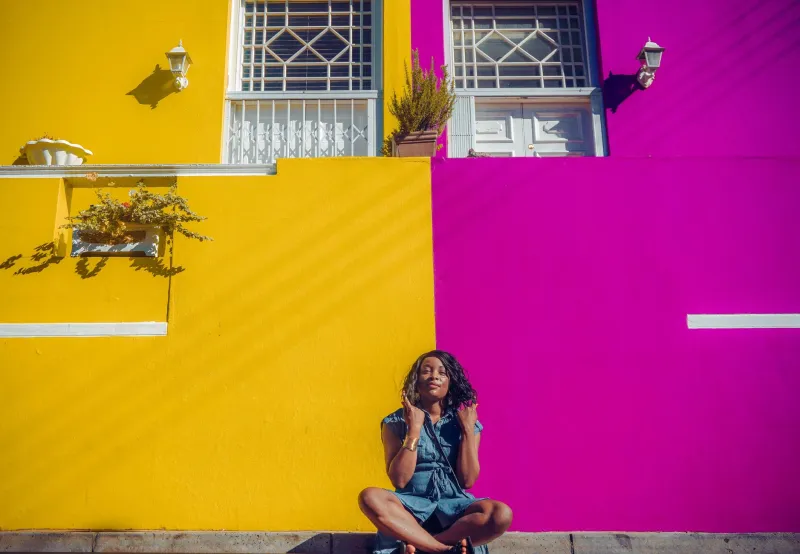
Color psychology layers another dimension onto this. Warm tones like red and orange are linked to heightened energy, assertiveness, and social confidence. Jewel tones — think emerald, sapphire, deep plum — signal authority and intentionality. Even a bright yellow, often dismissed as "too much," has been associated with optimism and approachability in social settings. These aren't arbitrary feelings. They're deeply embedded cultural and neurological responses that play out in real time, whether we're aware of them or not.
Dr. Carolyn Mair, a behavioral psychologist who specializes in fashion, has noted that what we wear functions as a kind of "psychological armor" — and when that armor is vibrant and intentional, it tends to prime us for engagement rather than retreat.
Real People, Real Shifts
We reached out to people across different professions and life stages who made a deliberate move toward bolder dressing. What they described wasn't just a wardrobe change — it was a behavioral one.
Dani, 34, a middle school teacher in Atlanta: "I spent years dressing 'professionally,' which basically meant a lot of beige and black. I felt invisible, honestly. Then one fall I bought this deep rust-orange wrap dress on a whim, wore it on a Monday, and my students were different with me. More engaged. But more importantly, I was different. I was louder, funnier. I moved around the room more. I've been intentional about color ever since."
Marcus, 47, a project manager in Chicago: "I'm a Black man in a predominantly white corporate environment. For a long time I played it extremely safe with clothes — I didn't want to stand out for the wrong reasons. But I started introducing color slowly. A teal pocket square. Then a burgundy suit. Something shifted. People remembered me differently. And I stopped shrinking in rooms where I used to make myself small."
Priya, 28, a freelance graphic designer in Los Angeles: "Color is literally my job, so it felt almost embarrassing that I wore so much gray. A therapist actually pointed it out — she said my wardrobe looked like I was trying not to take up space. That hit hard. Now I wear color every day and I genuinely feel more creative, more alive. My posture changed. I walk differently."
That last detail — posture — came up repeatedly. And it's not just anecdotal.
The Posture Connection Nobody Talks About
When you feel good in what you're wearing, your body language opens up. Social psychologist Amy Cuddy's research on expansive postures and confidence suggests a feedback loop between physical presence and internal state. Dressing boldly encourages you to claim space — wider stances, steadier eye contact, a chin that stays up instead of tucking down.
This isn't vanity. It's physiology meeting psychology. When you walk into a room in a fire-engine red coat, you've already made a decision about yourself: I am someone worth noticing. Your nervous system responds accordingly. Cortisol — the stress hormone — tends to decrease when we feel confident in our presentation, while dopamine gets a little boost from the visual pleasure of color itself.
In other words, your bold outfit is doing biochemical work before you've said a single word.
Decision Fatigue and the Bold Outfit Advantage
Here's a counterintuitive benefit of committing to a colorful wardrobe: it can actually simplify your mornings. When your closet is full of muted, interchangeable pieces, you face a paradox of choice — everything theoretically goes with everything, which means every combination requires deliberation.
But when you've built a wardrobe around bold, intentional color, your choices become more defined. You know your cobalt trousers pair with white, cream, or a contrasting tangerine. You know your emerald jumpsuit is a full statement on its own. Decision fatigue decreases, and you start your day having already made one powerful, affirming choice about who you are.
That's not a small thing. Research consistently links early-morning autonomy and intentionality to higher confidence and productivity throughout the day. Your outfit choice is the first act of self-authorship you perform every morning. Make it count.
How to Start If Bold Feels Scary
Not everyone is ready to walk out the door in head-to-toe fuchsia on day one — and that's completely fine. The shift toward bold dressing is most sustainable when it's gradual and rooted in your aesthetic, not a trend report.
Start with accessories. A cobalt bag, a pair of yellow earrings, or a printed scarf lets you test the emotional waters without full commitment. Notice how you feel. Notice how people respond.
Anchor bold pieces to your body type and undertone. Bold doesn't mean random. Understanding which saturated hues complement your skin tone means the color works with you, not against you — and that alignment is what produces the confidence effect.
Wear it somewhere low-stakes first. The grocery store, a walk in the park, a casual hangout with friends. Let your nervous system get comfortable with being seen before you debut a new palette in a high-pressure environment.
Track your mood. Seriously — keep a note on your phone. Jot down what you wore on days when you felt particularly sharp, energized, or socially at ease. Patterns will emerge fast.
The Bigger Picture
At its core, embracing bold color is an act of self-advocacy. It says: I am not here to disappear. I am not here to make you comfortable by making myself invisible. In a culture that often rewards conformity and subtlety, choosing vivid, unapologetic color is quietly — or not so quietly — radical.
The people who make the switch consistently describe it the same way: not as a fashion choice, but as a life choice. A decision to take up space, to invite connection, to show up as a full and vibrant version of themselves rather than a dimmed-down approximation.
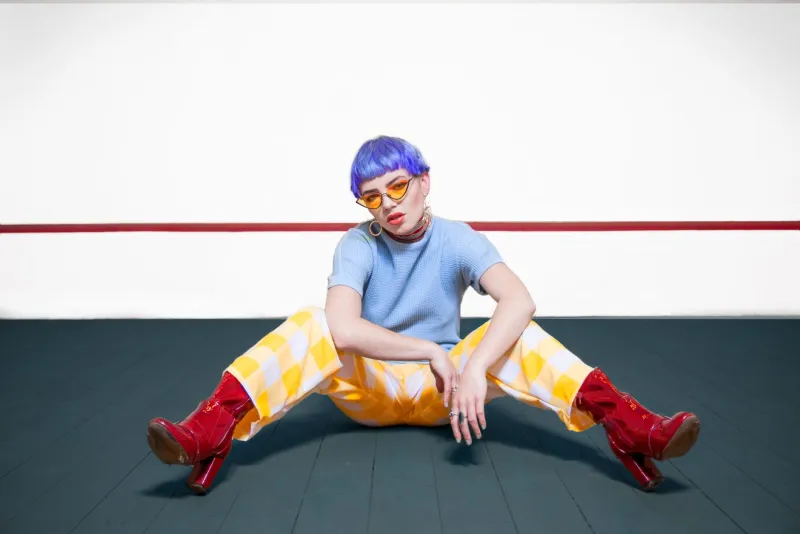
And if a cobalt blazer or a pair of cherry-red boots can help get you there? That's not shallow. That's absolutely fabulous.