Your Outfit Is Talking — Here's What the Science Says People Are Actually Hearing

You know that feeling when you pull on a fire-red blazer and suddenly stand a little taller? Or when you reach for the cobalt blue dress before a big presentation because something about it just feels right? That's not superstition. That's not vanity. That is, genuinely, science doing its thing.
Color psychology has been a legitimate field of research for decades, but it's only recently that fashion psychologists and neuroscientists have started connecting the dots between what we wear, how we're perceived, and how we perform in the world. And the findings? Honestly kind of wild — in the best way.
First, Let's Talk About What Your Brain Does With Color
Here's the thing most people don't realize: color processing happens fast. We're talking milliseconds. Before someone clocks your shoes or your handbag or even your face, their brain has already registered the dominant hues in your outfit and started making associations. Researchers at the University of Rochester found that color cues influence social judgments almost instantaneously — which means that bold color choice you made this morning was already doing PR work before you even opened your mouth.
The brain's limbic system — the emotional processing hub — responds to color with real physiological reactions. Warm colors like red and orange can elevate heart rate and trigger alertness. Cooler shades like deep teal or lavender tend to signal calm and openness. When you walk into a room wearing a saturated, intentional color, you're essentially sending a neurological memo to everyone present.
What Fashion Psychologists Actually Say About Bold Dressing
Fashion psychologist Dr. Carolyn Mair, author of The Psychology of Fashion, has long argued that clothing choices are a form of nonverbal communication that we've massively underestimated. The colors we choose signal status, mood, personality, and even our relationship to power — all without a single word.
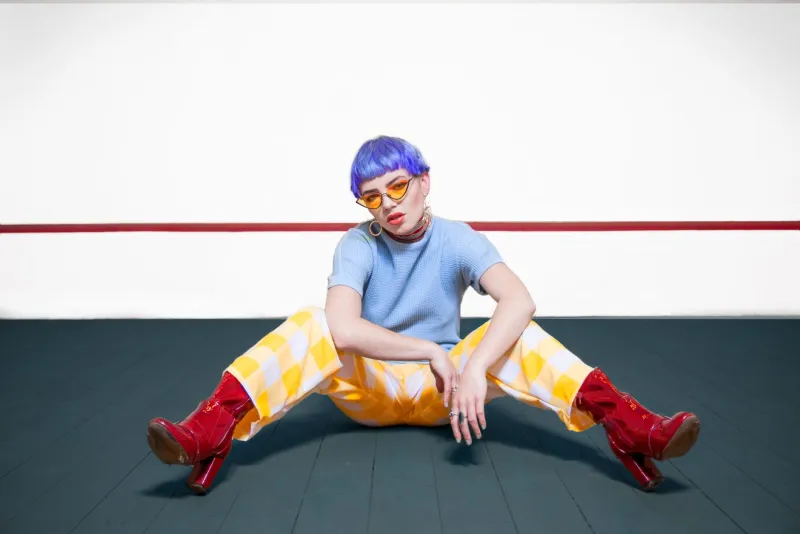
In professional settings especially, bold color does something fascinating. Studies have shown that people in vivid, intentional outfits are more likely to be perceived as confident, decisive, and even more competent — not despite standing out, but because of it. The implicit message is: I made a choice. I'm not hiding. I know exactly what I'm doing.
That's a very different energy from blending into a sea of beige and gray, which — no shade — can sometimes read as uncertain or disengaged, even when you're neither.
The Enclothed Cognition Effect: You're Not Imagining It
Psychologists Adam Galinsky and Hajo Adam introduced the concept of "enclothed cognition" back in 2012, and it's still one of the most cited ideas in fashion psychology circles. The premise: what you wear doesn't just affect how others see you — it literally changes how you think and behave.
In their research, participants who wore a white lab coat (which they were told belonged to a doctor) performed significantly better on attention-based tasks than those who wore the same coat but were told it was a painter's coat. The coat was identical. The cognitive shift was real.
Apply that to color, and the implications are genuinely exciting. When you put on a bold, intentional outfit — something that feels like you, amplified — you're not just dressing for the room. You're dressing for your own brain. You're telling yourself: I'm ready. I'm present. I'm not playing small today.
Color as a Social Signal: Reading the Room (and Owning It)
Different colors carry different cultural weight in the US context, and it's worth knowing what you're working with.
Red is power, passion, and urgency. Research published in the Journal of Experimental Psychology found that athletes wearing red won more frequently in competitive sports — an association that bleeds into everyday social dynamics. Wearing red signals that you're not here to be overlooked.
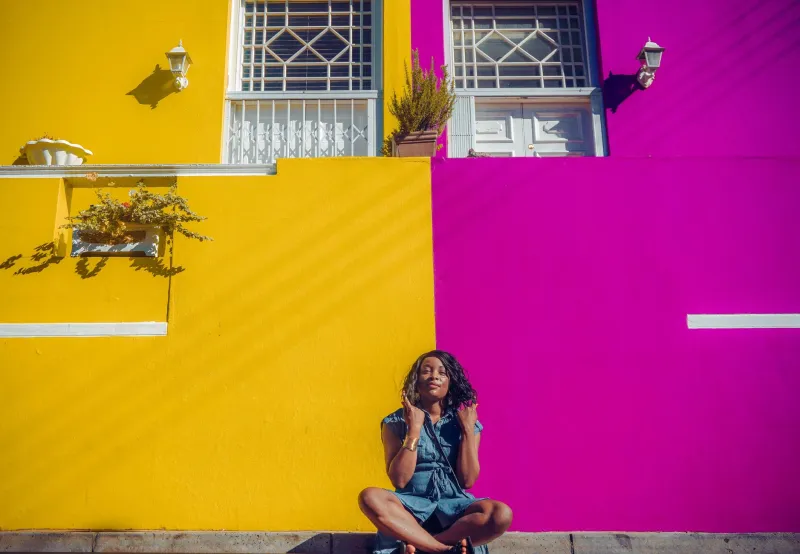
Yellow and orange are social magnets. These warm, high-energy hues register as approachable and optimistic. If you want to be the person who draws people in at a party or makes a new colleague feel immediately at ease, these are your secret weapons.
Purple has historically been tied to creativity and unconventionality. Wearing it signals that you think differently — which, in creative industries or social settings where originality is valued, is a serious asset.
Bold blues and greens — think electric cobalt or emerald — communicate trustworthiness and groundedness while still making a statement. These are the colors that say I'm steady, and I'm also not boring.
Knowing this doesn't mean you should game your wardrobe like a chess match. It means you can dress with intention, understanding that color is one of the most powerful tools in your personal style kit.
Practical Ways to Start Using Color as a Confidence Tool
If you've been living in a mostly neutral wardrobe and the idea of going full bold feels like a lot, that's completely valid. Here's how to ease in without feeling like you're wearing a costume:
Start with accessories. A pair of electric yellow earrings or a cherry red bag lets you test the waters without overhauling your whole look. Notice how you feel. Notice how people respond.
Anchor bold color with something familiar. A cobalt blue top with your favorite jeans is a low-stakes way to introduce vibrancy. The familiar bottom half keeps you grounded while the color does its thing up top.
Dress for the version of yourself you want to show up as. Before a job interview, a first date, or a tough conversation — ask yourself what color feels like confidence to you personally. That's the one to reach for.
Build a small bold core. You don't need a wardrobe full of neon. Even two or three statement pieces in colors that genuinely light you up can transform how you move through the world.
The Bottom Line: Color Is Never Just Decorative
Wearing bold, intentional color is an act of self-expression that has real, measurable effects — on your mood, your performance, and the way you're received by the people around you. It's not about following trends or dressing to impress. It's about understanding that what you put on your body is a form of communication, and you get to decide what story it tells.
At Fuzi Fabulous, we've always believed that style is one of the most accessible forms of personal power. And now? Science has officially caught up with what the bold dressers among us already knew: color is never just decoration. It's a statement. It's a mindset. It's yours to own.
So the next time someone asks why you wore that emerald green jumpsuit to a Tuesday morning meeting — just smile and tell them your brain made you do it.