Dress Bold, Think Brave: What Happens to Your Brain When You Stop Playing It Safe With Color
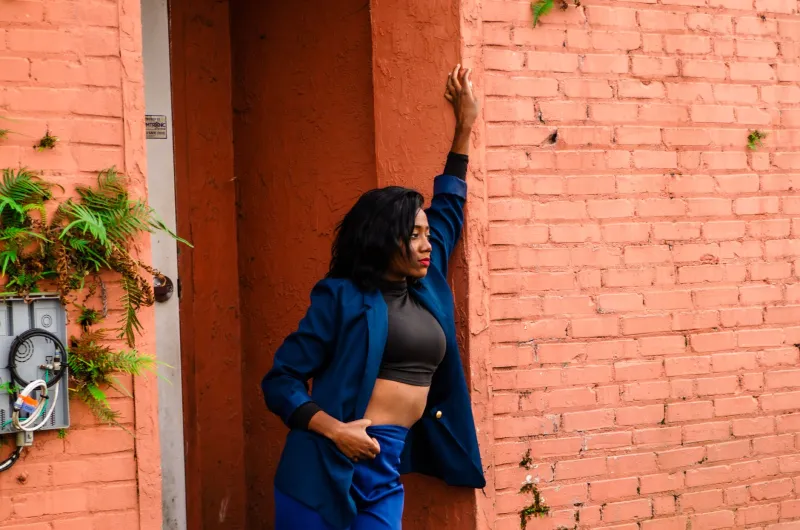
There's a moment that a lot of bold dressers describe in almost identical terms. It's not the first time they wore the bright color — it's the third, or the fifth, or the tenth. It's the morning they reach for the electric blue dress without thinking twice, walk out the door, and realize somewhere around 10am that they just spoke up in a meeting they would have stayed quiet in six months ago. Or they negotiated something they'd been putting off. Or they said no to something that had always felt too scary to decline.
The outfit and the decision feel unrelated. They're not.
Your Brain on Bold: The Dopamine Connection
Let's start with the neurochemistry, because it's genuinely fascinating. Dopamine — the neurotransmitter most associated with motivation, pleasure, and reward-seeking behavior — plays a significant role in how we experience getting dressed. Research in the field of "enclothed cognition" (a term coined by researchers Hajo Adam and Adam Galinsky in a widely cited 2012 study) demonstrates that clothing doesn't just reflect our psychological state — it actively shapes it. What we wear influences our cognitive processes in measurable ways.
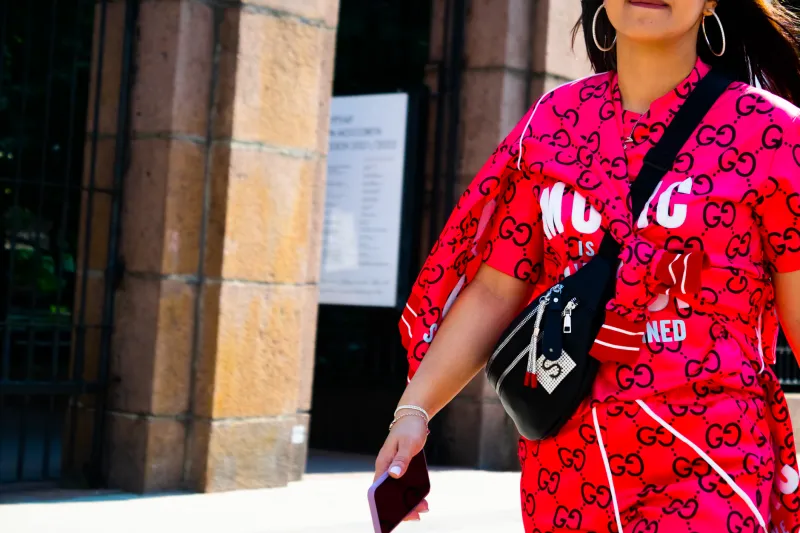
Bold color specifically appears to trigger a more pronounced dopamine response than neutral tones. Color psychology research consistently shows that vivid, saturated hues — particularly warm tones like red, orange, and yellow, but also high-saturation versions of cool tones — activate arousal responses in the nervous system. This isn't just aesthetic preference. It's physiological. Your brain registers bright color as stimulating, and stimulation is the precondition for motivation.
When you put on something vivid and feel that little internal yes — that's not vanity. That's a dopamine hit, and it's setting the neurological stage for the rest of your day.
The Feedback Loop Nobody Talks About
Here's where it gets really interesting. Bold dressing doesn't just create a one-time mood boost — it initiates a feedback loop that, over time, can genuinely rewire how you see yourself and how you interact with the world.
It works like this: you wear the bold color. You feel more visible, more activated, more like a specific version of yourself. That feeling influences your behavior — you stand a little taller, make eye contact a little more readily, speak with slightly more certainty. People respond to that energy. They engage with you differently, take you more seriously, or simply mirror your confidence back at you. That external response reinforces the internal feeling. The loop closes, and then it opens again tomorrow when you get dressed.
Repeat this cycle enough times and something shifts at a deeper level. Psychologists call this process "behavioral confirmation" — the way our actions, repeated consistently, gradually reshape our self-concept. You start as someone who wears bold color. Over time, you become someone who is bold. The wardrobe is the entry point, but the destination is identity.
Bold Dressing and Risk Tolerance: The Research Is Wild
One of the more surprising findings in the enclothed cognition space is the relationship between what we wear and our willingness to take risks. Studies have found that people who feel more powerful in their clothing demonstrate higher risk tolerance in subsequent decision-making tasks — including financial decisions, negotiation scenarios, and situations requiring assertiveness.
Red, in particular, has been studied extensively in this context. Research published in the Journal of Experimental Psychology found that wearing red was associated with increased confidence and perceived dominance in competitive situations. This isn't about aggression — it's about the internal permission that bold choices seem to grant us.
That internal permission is the key. When you make a bold choice in the morning — when you choose the saturated teal over the safe navy, the printed statement piece over the plain alternative — you're practicing a micro-version of the same cognitive muscle you use when you negotiate your salary, set a boundary in a relationship, or pitch an idea you're not sure will land. The choice to be visible is the same choice, whether it's playing out in your closet or your conference room.
What Bold Dressers Actually Notice Changing
Jamila, a 34-year-old project manager in Chicago, started intentionally incorporating bold color into her workwear after years of defaulting to a nearly all-black wardrobe. "I told myself it was professional," she says. "But honestly, I was hiding. I didn't want to be noticed because being noticed felt dangerous." Within a few months of committing to color, she asked for a raise she'd been putting off for two years — and got it. "I don't think the yellow blazer got me the raise," she laughs. "But I think the version of me who was willing to wear the yellow blazer was also willing to have the conversation."
Sophia, 41, a freelance graphic designer in Austin, describes a similar shift in her personal relationships. "I started dressing boldly and I started being more honest with people. I think when you stop hiding in your clothes, you stop hiding in other ways too. It's like you break the habit of making yourself smaller."
These experiences aren't coincidences. They're the behavioral confirmation loop in action — the bold choice in the closet practicing the neural pathway that fires later in the day when something harder is required.
How to Use This Information Intentionally
Knowing the science is useful. Applying it is better. Here's how to leverage what your wardrobe can do for your brain:
Anchor bold color to specific intentions. On days when you need to be assertive — a difficult meeting, a hard conversation, a big presentation — reach deliberately for your most confident color. You're not being superstitious. You're priming your nervous system.
Build the habit gradually. You don't need to overhaul your wardrobe overnight. Introduce one bold piece at a time and pay attention to how you feel and behave on the days you wear it versus the days you don't. The data you collect about yourself is more valuable than any trend report.
Notice the feedback, not just the feeling. The internal dopamine hit is real, but the external feedback loop is where the lasting change happens. Pay attention to how people respond to you when you're wearing bold color. Let those responses update your self-image.
Don't underestimate the cumulative effect. One bold outfit is a mood. A consistent bold wardrobe is a rewired self-concept. The transformation researchers and psychologists describe isn't instantaneous — it's the result of repeated, intentional practice over time.
The Bravest Thing in Your Closet
Your wardrobe has always been more than fabric and color. It's a daily declaration of who you are and who you're willing to be seen as. And if the science tells us anything, it's that the choice to be seen — vividly, boldly, without apology — doesn't just change how others perceive you. It changes how you perceive yourself. It changes what you're willing to ask for, stand up for, and reach toward.
The boldest thing in your closet might just be the bravest thing about you. Wear it like you mean it.