Color Has No Expiration Date: Why Bold Dressing Is the Most Radical Thing a Woman Over 40 Can Do
At some point — and nobody can quite pinpoint exactly when — a message gets delivered to women. It comes through magazine spreads featuring "age-appropriate" style guides, through well-meaning relatives who suggest something a little more subtle, through the fashion industry's quiet habit of centering color and joy in the youth sections while steering older shoppers toward beige, navy, and black. The message is consistent, even when it goes unspoken: you've had your turn with bold. Time to dial it back.
We are here to say, loudly and in the most saturated hue we can find: absolutely not.
The Myth of Age-Appropriate Color (And Who It Actually Serves)
Let's call this what it is. The idea that women should progressively mute their wardrobes as they age isn't rooted in aesthetics or practicality — it's rooted in a culture that has historically treated women's visibility as something to be gradually revoked. You get to be seen when you're young, when you're conventionally desirable, when you fit the narrow mold. After that? Fade gracefully, please.
Bold color is inherently an act of claiming space. It says I am here, I am visible, and I am not asking permission. And there is nothing — not a birthday, not a gray hair, not a decade — that makes that statement less valid or less powerful.
Styling professionals and color psychologists increasingly push back on the old rules. The notion that certain colors "age" a person or that bright hues are somehow less dignified on a 55-year-old than on a 25-year-old has no real foundation in how color actually works. What changes with age isn't which colors you can wear — it's understanding which shades, saturations, and combinations work best for your evolving skin tone, hair color, and the specific energy you want to project. That's a skill, not a limitation.
Real Women, Real Color, Real Power
Margarita, 58, a high school art teacher in New Mexico, started wearing bold color in her late 40s after spending most of her thirties in what she calls her "greige era." "I thought I was being professional," she says. "I thought I was being appropriate. And then I turned 47 and I just got so tired of looking in the mirror and not seeing myself." She now wears vivid cobalt, deep magenta, and layered jewel tones almost exclusively. "My students respond to me differently. I feel like myself for the first time in years. And honestly? I think I look better now than I did when I was trying to disappear."
Denise, 63, a retired marketing director in Atlanta, describes reclaiming color in her 60s as "the style equivalent of finally saying what you actually think." After decades of corporate neutrals and careful, inoffensive choices, she now builds her wardrobe around saturated teals, bold prints, and the kind of statement-making separates she avoided for most of her career. "I spent thirty years dressing for rooms full of people who didn't want to be distracted by a woman who stood out. Now I dress for me. It feels like freedom."
These aren't outliers. They're part of a growing cultural shift — one where women are actively, intentionally refusing the slow fade that previous generations accepted as inevitable.
How Your Color Needs Actually Evolve (It's Not What You Think)
Here's where we get nuanced, because bold dressing at 50 isn't always identical to bold dressing at 25 — not because it should be quieter, but because your actual coloring may have shifted in ways worth understanding.
Skin tone changes. As melanin production shifts with age, some women find their complexion becomes either warmer or cooler than it once was. Hair going silver or gray often opens up a whole new palette — those icy lavenders, soft whites, and cool jewel tones that might have washed you out as a brunette can suddenly be extraordinary. Gray hair is not a limitation. For many women, it's a palette upgrade.
Contrast plays differently. High contrast between hair, skin, and clothing can be incredibly striking, and many women find that as their hair lightens naturally, playing with contrast becomes a more intentional part of their style. A deep plum against silver hair and warm skin? That's not too much. That's architecture.
Fabric and texture matter more. Bold color at any age looks best in fabrics that drape and move beautifully. As body composition shifts over the decades, the way a color moves with you becomes as important as the color itself. Matte fabrics and fluid drape tend to be more universally flattering than stiff or shiny materials — not because you need to hide, but because movement reads as confidence.
Practical Bold: Building a Vivid Wardrobe for Every Life Stage
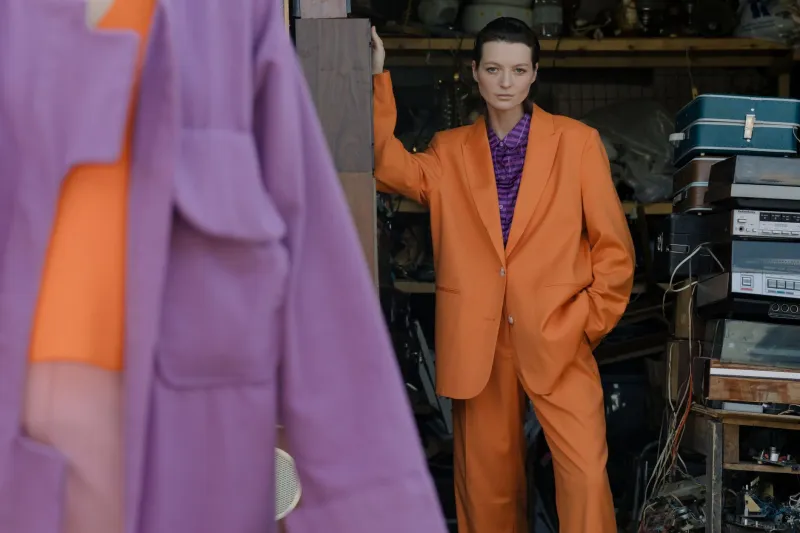
In your 40s: This is often the decade of finding your actual style identity after years of dressing for other people's expectations. Lean into it. Start with bold in categories where you feel most comfortable — a statement bag, a vivid blazer, a pair of color-drenched trousers. Let yourself be surprised by what you reach for.
In your 50s: Many women in this decade describe a kind of style liberation that comes with giving fewer concerns to outside opinion. Use it. This is the decade to experiment with color combinations, to try the print you always walked past, to wear the red dress to the Tuesday lunch. You've earned the audacity — use it.
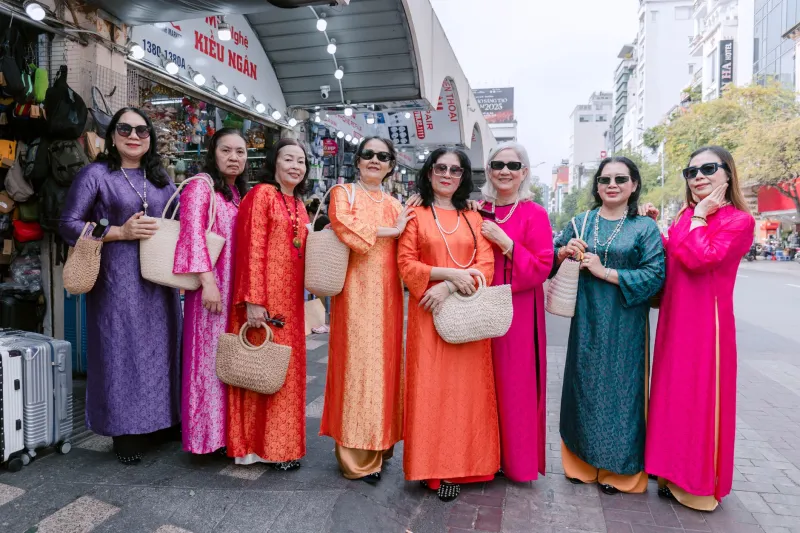
In your 60s and beyond: Bold dressing in this decade often becomes deeply intentional and personal in the most beautiful way. Women who've been rocking vivid color for years tend to have a clarity of style that's genuinely aspirational. And women who are discovering it for the first time often describe it as one of the most joyful style experiences of their lives. It is never, ever too late.
The Defiance Is the Point
There is something quietly radical about a woman in her 50s wearing a fire-engine red coat and walking into a room like she owns it. Not because red is inherently political, but because the expectation was that she'd be wearing something forgettable by now — and she chose not to.
Bold color at any age is a statement. After 40, it becomes something more: a declaration that you are still here, still becoming, still entirely unwilling to disappear on anyone else's schedule.
Wear the color. All of it. At every age. Especially the ones they told you were too much.